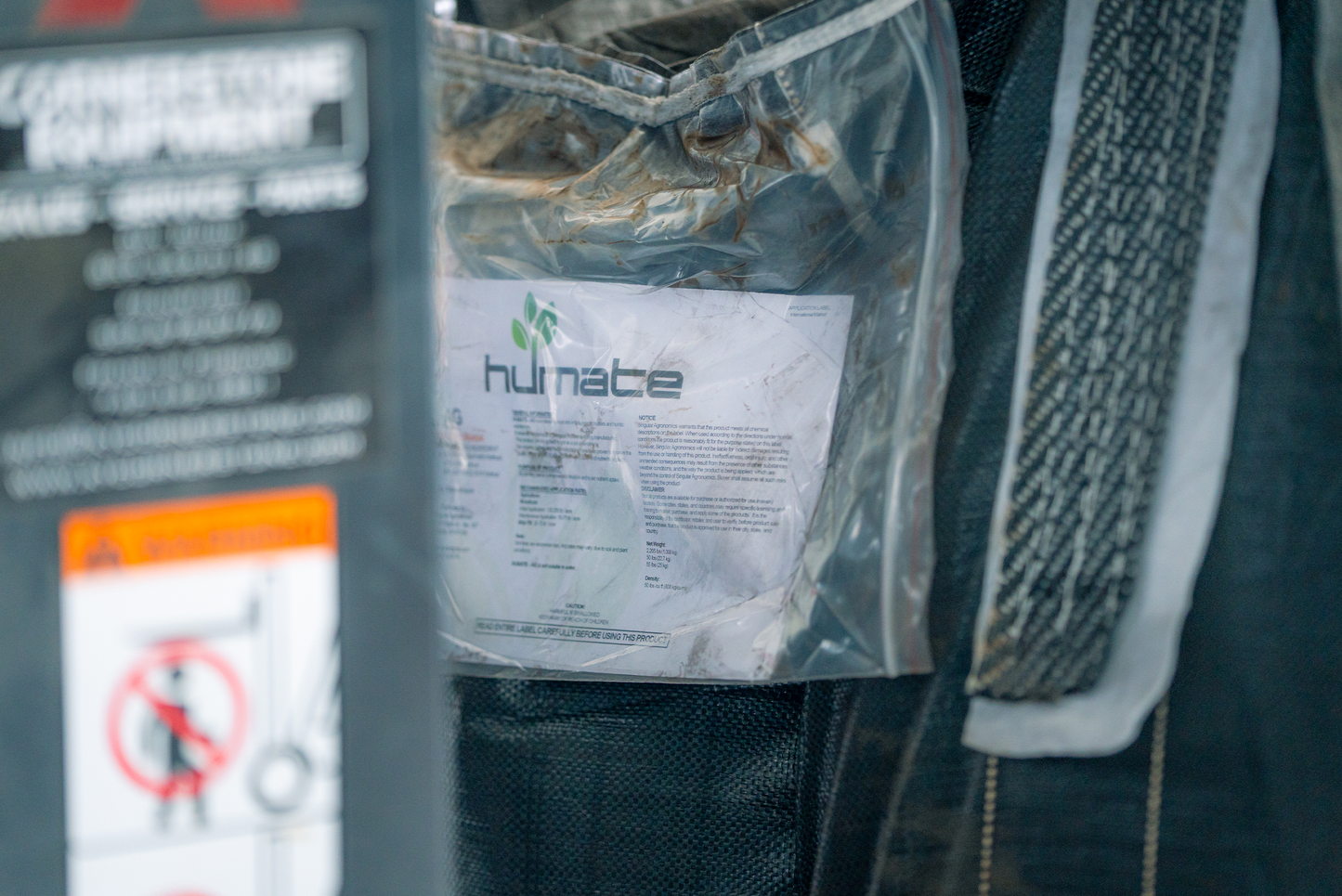
Humate
Humate
A 100% natural, carbon-based soil amendment derived from high-quality humate sources — designed to improve nutrient holding, water retention, soil structure, and long-term soil fertility.
Healthy soil holds nutrients, drains well, breathes, and supports a thriving microbial community. Humate works at the foundation of all of that — it's a concentrated source of stable organic carbon that improves soil function over time.
Humate also buffers salt, both from fertilizers and naturally occurring in the soil profile. That salt buffering reduces burn risk to roots and equipment and can improve the efficiency of co-applied inputs.
One important note: do NOT mix Humate with nitrogen fertilizers like urea or AMS in the tank. Nitrogen and carbon bond aggressively — great in the soil, but it creates an unworkable mix in the tank.
"Every dollar you spend on fertility performs better in soil with good organic carbon levels."
When to Apply
• Broadcast soil application
• Mixed with liquid fertilizers (not nitrogen — see above)
• Liquid manure applications (1–2 gal per 10,000 gal)
• Fall applications to build long-term organic matter
What It's For: Building soil organic matter; improving nutrient retention and CEC; stimulating soil biology; buffering salt in soil and fertilizers.
Nutrient Profile: 100% natural humate — high carbon, low heavy metals; no synthetic additives
Application Rate: Varies by application method and soil conditions — consult your dealer
Crops: All crop types including row crops, vegetables, fruits, grains, and turf
Compatibility: Mixes with most fertilizers. Do NOT mix with urea, AMS, or other nitrogen fertilizers.
Packaging: Liquid
What makes your Humate different from cheap humic acid products?
Quality matters more with humate than almost any other input. We source from deposits with verified high carbon content and low heavy metal levels — both are requirements, not just preferences. Lower-quality humate sources have inconsistent carbon levels and can introduce heavy metals into soil. The source determines the product.
Why can't I mix Humate with urea or AMS?
Carbon and nitrogen have a strong affinity for each other — that's actually one of the reasons humate is so valuable in the soil, where that bonding helps stabilize nitrogen and reduce volatilization. But in the tank, that bond creates a thick, problematic mixture that doesn't apply cleanly or evenly. Keep them separate in the tank and let the soil do the bonding.
How quickly will I see results from Humate?
Humate builds soil over time — it's not a quick-fix input. Some benefits like salt buffering and nutrient holding show up in the near term. Structural and biological improvements tend to compound over multiple seasons of consistent use. Think of it as an investment in your soil's long-term productivity, not a single-season fix.
Can I apply Humate with liquid manure?
Yes — 1 to 2 gallons per 10,000 gallons of hog or dairy manure is the recommended rate. Humate helps buffer the salt load in manure and improves how the soil handles that organic nitrogen as it breaks down.
- 2000 lbs. bulk sack
- Contact for shipping options
Couldn't load pickup availability